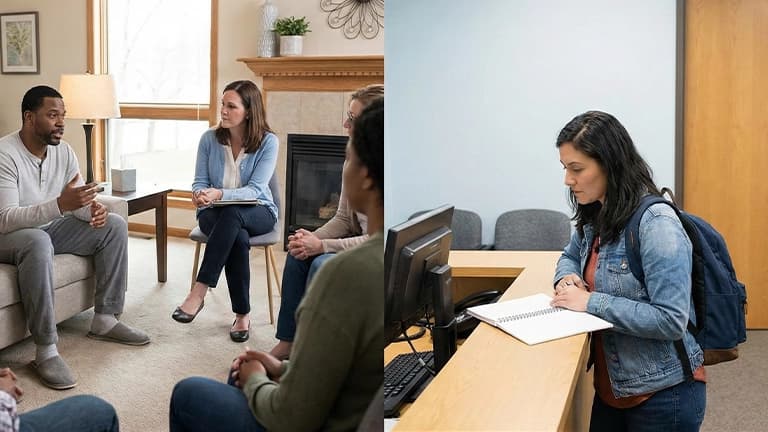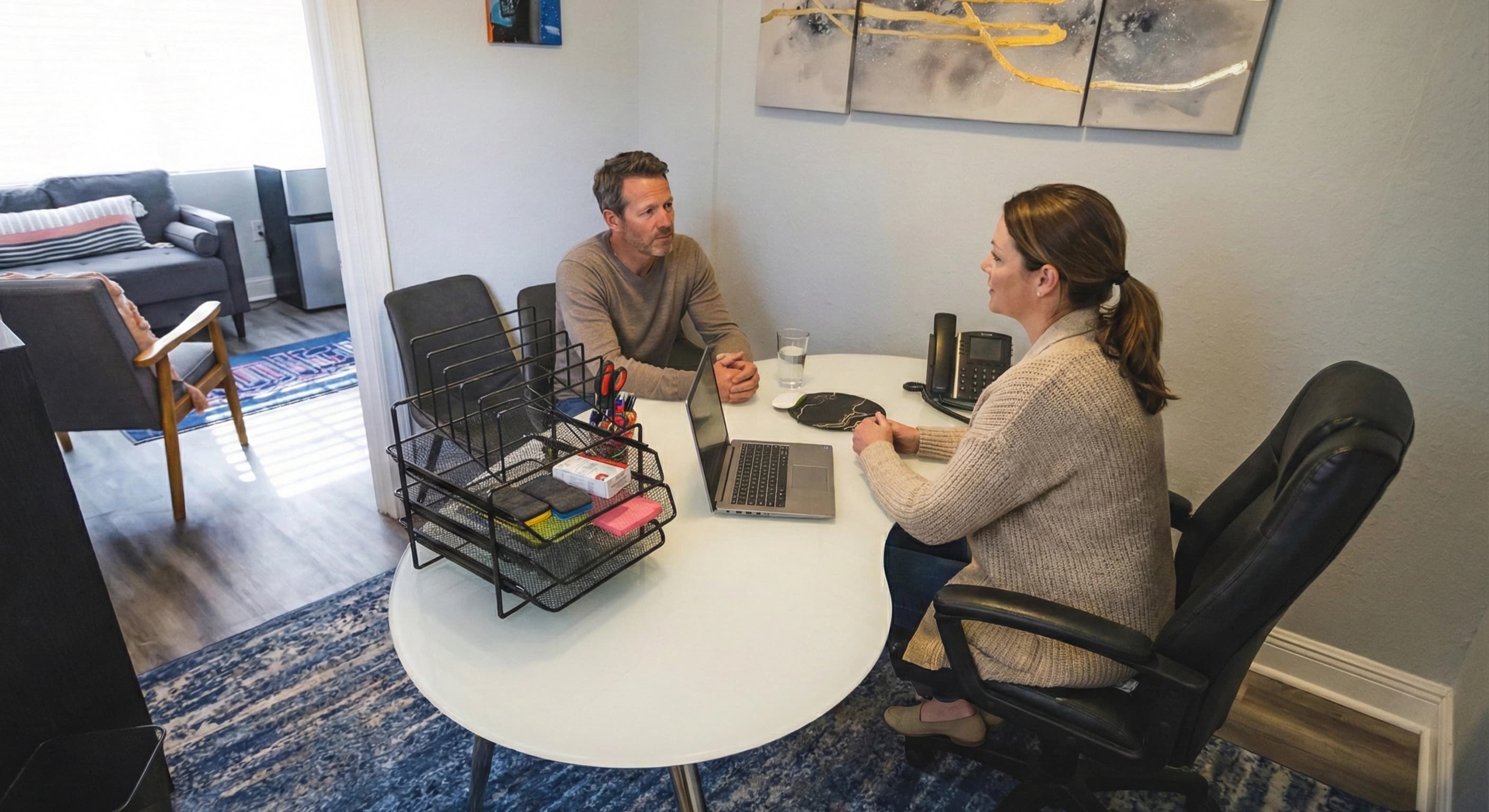

You cannot force someone into lasting recovery, but you can change how you respond to their addiction. The CRAFT method, healthy boundaries, and professional intervention are evidence-based approaches that increase the chances your loved one will accept help. Florida's Marchman Act also allows families to petition for involuntary assessment when someone's life is at risk.
- 1People resist rehab for real reasons including fear of withdrawal, shame, denial, and past negative treatment experiences — understanding their resistance is the first step
- 2The CRAFT method is clinically proven to be twice as effective as traditional interventions at getting a loved one into treatment
- 3Setting boundaries is not punishment — it means stopping behaviors that make it easier for your loved one to keep using
- 4Arguing, threatening, and enabling are natural responses but they push your loved one further from recovery, not closer
- 5Florida's Marchman Act allows families to petition the court for involuntary substance abuse assessment when a loved one is in danger
It is 2am. You cannot sleep. You are lying in bed replaying every conversation, every argument, every promise they broke. You have begged, screamed, cried, and bargained. Nothing has worked. The person you love is destroying themselves, and they refuse to get help.
If this is you right now, reading this on your phone in the dark, know this: you are not alone, you are not crazy, and there are things that actually work — even when they say no.
At Amity Palm Beach, we talk to families in your exact situation every single day. We have seen people who swore they would never go to treatment walk through our doors voluntarily. Not because someone forced them, but because someone in their life finally learned how to help the right way.
Why People Refuse Rehab
Before you can help someone accept treatment, you need to understand why they are saying no. Their refusal is not about you. It is about what is happening inside them.
Fear of Withdrawal
For people dependent on opioids, alcohol, or benzodiazepines, withdrawal is not just uncomfortable — it is terrifying. They have felt the early stages before. The muscle pain, the nausea, the crawling anxiety. They would rather keep using than face that. This is not weakness. This is their nervous system screaming at them.
Denial
Denial is a hallmark of addiction, but it is not as simple as people think. Most people who say "I'm not that bad" are not lying. They genuinely believe it. Their brain has rewired itself to protect the addiction, minimizing consequences and rationalizing behavior. They compare themselves to someone worse off: "I still have a job," "I only drink at night," "I have never used a needle."
Shame
Shame whispers that they are a bad person, not a sick person. Going to rehab means admitting out loud that they have a problem, and for many people that feels like confirming their worst fear about themselves. The stigma around addiction is still brutal, and shame keeps more people from treatment than anything else.
Past Bad Experiences
If your loved one has been to treatment before and relapsed, they may believe that rehab does not work — at least not for them. Previous negative experiences with facilities, counselors, or the process itself create real barriers. They are not being difficult. They are protecting themselves from what felt like failure.
Not Believing They Deserve Help
Many people with substance use disorders carry deep-seated beliefs that they do not deserve recovery. Years of addiction erode self-worth. Accepting help requires believing you are worth saving, and that belief may be the thing that is most damaged.
What Actually Works
Research and decades of clinical experience point to specific strategies that increase the likelihood of your loved one accepting treatment. None of them involve screaming, begging, or issuing ultimatums.
The CRAFT Method
Community Reinforcement and Family Training (CRAFT) is the most evidence-based approach for families dealing with a loved one who refuses treatment. Developed by Dr. Robert Meyers, CRAFT has been shown in clinical studies to get loved ones into treatment 64 to 74 percent of the time — roughly twice the success rate of traditional interventions or Al-Anon alone.
CRAFT works by teaching you to change the dynamic between you and your loved one. The core principles include:
- Reinforce sober behavior. When your loved one is sober, engage with them positively. Do things together. Show them that being sober leads to connection and warmth.
- Allow natural consequences of use. When they are using, step back. Do not rescue them from hangovers, missed obligations, or embarrassment. Let reality teach its lessons.
- Improve communication. CRAFT teaches specific communication techniques that reduce conflict and increase the chance your loved one will hear you when you suggest treatment.
- Suggest treatment at the right moment. Timing matters enormously. CRAFT trains you to recognize the windows when your loved one is most receptive — often after a natural consequence, during a sober and reflective moment, or when they express frustration with their own life.
CRAFT is not about manipulation. It is about learning to stop the patterns that unintentionally keep the addiction cycle going, and replacing them with responses that create an opening for change.
Setting Boundaries Without Ultimatums
Boundaries and ultimatums sound similar, but they are fundamentally different. An ultimatum is a threat: "Go to rehab or I'm leaving." A boundary is a statement about what you will and will not accept in your own life: "I love you, but I will not have drugs in my home."
Effective boundaries sound like:
- "I will not lend you money anymore."
- "You are welcome here when you are sober. When you are not, I need you to leave."
- "I will not call your boss and make excuses for you."
- "I will support your recovery in any way I can, but I will not support your addiction."
The key is following through. A boundary you do not enforce is not a boundary. This is the hardest part, and it is where family counseling or a CRAFT-trained therapist can provide essential support.
Professional Intervention as a Last Resort
If CRAFT and boundary-setting have not created an opening, a professionally guided intervention may be appropriate. A certified intervention professional (CIP) works with the family beforehand to plan every detail: who will be in the room, what each person will say, what treatment options are ready, and what consequences will follow if the person declines.
A successful intervention requires:
- A professional interventionist guiding the process
- Careful planning over days or weeks, not hours
- Participants who can stay calm and compassionate
- A treatment bed ready and waiting — ideally with travel arrangements made
- Clear, pre-agreed consequences if the person says no
Do not attempt an intervention without professional guidance. An unprepared intervention can shatter trust, escalate conflict, and push your loved one further away from treatment.
What Does Not Work
Knowing what not to do is just as important as knowing what works. If you have tried any of these approaches, you are not a bad person — they are natural reactions. But they do not lead to recovery.
Enabling
Enabling is anything you do that removes the natural consequences of someone's addiction. Paying their rent so they do not get evicted. Calling in sick for them. Bailing them out of jail. Cleaning up their messes — literally and figuratively. Every time you shield them from consequences, you remove a reason for them to change.
Arguing When They Are Intoxicated
There is no productive conversation to be had with someone who is drunk or high. Their brain is chemically unable to process what you are saying the way you intend it. Save important conversations for when they are sober. You will both be better served.
Trying to Control Their Use
"Just drink less." "Only use on weekends." "Let me hold onto your pills." These attempts to manage someone else's substance use do not work because addiction is not a matter of willpower or scheduling. You cannot moderate a disease.
Threats You Will Not Follow Through On
Empty threats teach your loved one that your words do not mean anything. If you say you will leave and you do not leave, you have just proven that there are no real consequences. Only state consequences you are genuinely prepared to enforce.
The Florida Marchman Act
When someone's life is in immediate danger and they refuse all help, Florida law provides a legal option. The Marchman Act (Florida Statute Chapter 397) allows family members, loved ones, or three concerned individuals who have direct knowledge of the person's substance use to petition the court for involuntary assessment and stabilization.
How the Marchman Act works:
- You file a petition with the county court describing why you believe the person has lost self-control due to substance use and is a danger to themselves or others
- A judge reviews the petition and may order an involuntary assessment (up to 5 days)
- Based on the assessment, the court can order involuntary treatment (up to 60 days with extensions possible)
- The person receives a court-appointed attorney to protect their rights
The Marchman Act is not a punishment. It is a safety net for situations where someone is so impaired by addiction that they cannot make rational decisions about their own care. It is a serious legal step, and we recommend consulting with an attorney or treatment professional before filing.
At Amity Palm Beach, we can help guide families through this process. Our admissions team has experience working with Marchman Act cases and can explain the steps involved.
Take Care of Yourself Too
Here is something nobody tells you: you cannot pour from an empty cup. Watching someone you love self-destruct takes an enormous toll on your own mental and physical health. Anxiety, depression, hypervigilance, and emotional exhaustion are common among family members of people with substance use disorders.
Seeking your own support — whether through therapy, Al-Anon, Nar-Anon, or CRAFT-based family counseling — is not selfish. It is necessary. You deserve help too, and getting it makes you more effective at helping your loved one when the window opens.
Your Next Step
If you are reading this, you have already taken a step. You are looking for answers, which means you have not given up. That matters more than you know.
Call Amity Palm Beach at (888) 664-0182. Our family support team is available 24/7, and we talk to families in your situation every day. We can help you understand your options, develop a plan, and be ready when your loved one says yes. We accept most major insurance plans and can verify your coverage over the phone.
You do not have to figure this out alone. And neither do they.
Medical disclaimer: This article is for informational purposes only and does not constitute medical advice. Always consult with a healthcare provider or legal professional for personalized recommendations.
Frequently Asked Questions
How do you convince someone to go to rehab?
Rather than convincing through arguments, use the CRAFT method: reinforce sober behavior, allow natural consequences of use, improve your own communication skills, and suggest treatment during calm moments. Research shows CRAFT gets loved ones into treatment about 64-74% of the time.
What is the CRAFT method for addiction?
CRAFT (Community Reinforcement and Family Training) is an evidence-based approach that teaches families to change their interactions with a loved one who has a substance use disorder. It focuses on positive reinforcement of sober behavior, allowing natural consequences, and strategically suggesting treatment at receptive moments.
What is the Marchman Act in Florida?
The Florida Marchman Act (Chapter 397) allows family members, loved ones, or three concerned individuals to petition the court for involuntary substance abuse assessment and stabilization when a person has lost self-control due to substance use and is a danger to themselves or others.
Should I do an intervention for my loved one?
Professional interventions can work but should be a last resort after other approaches like CRAFT have been tried. If you pursue an intervention, always use a certified interventionist — never attempt one without professional guidance. A poorly planned intervention can cause lasting damage to trust.
How do I stop enabling an addict?
Stop making excuses for their behavior, paying their bills related to consequences of use, lying to cover for them, and removing consequences of their addiction. This is not about withholding love — it is about refusing to participate in behaviors that allow addiction to continue. Call (888) 664-0182 for family guidance.
Sources & References
This article is based on peer-reviewed research and authoritative medical sources.
- Community Reinforcement and Family Training (CRAFT) — NIH/National Library of Medicine (2021)
- The Marchman Act - Florida Statute Chapter 397 — Florida Legislature (2024)
- Family Therapy and Addiction Treatment — National Institute on Drug Abuse (2024)
- Substance Use Disorder Treatment and Family Members — SAMHSA (2024)
Amity Palm Beach
Amity Palm Beach Medical Team